

The Ghost Town Treasure of Fayette |
Unlock the secrets of Fayette's abandoned riches - discover the hidden ghost town treasure! |
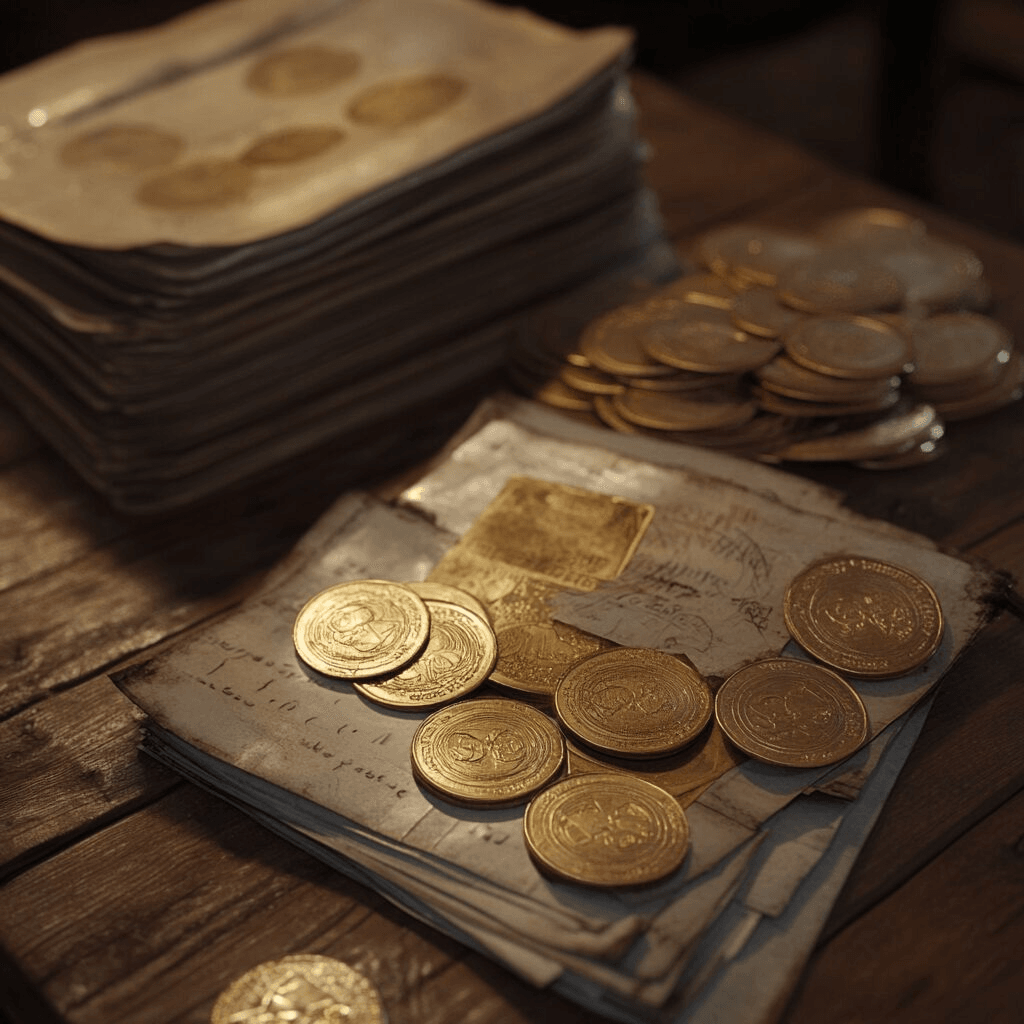
Deep in Michigan’s Upper Peninsula, on the edge of the Garden Peninsula, lies the shell of a town that time—and perhaps a massive fortune—forgot. Fayette Historic Townsite is famous today as a beautifully preserved 19th-century ghost town, but a lingering legend suggests that its real legacy isn't the iron it produced, but the gold it left behind. The rumored "Ghost Town Treasure of Fayette" is whispered to be worth upwards of $8,000,000 in today’s currency. Here is the story of the boom, the bust, and the bounty hidden beneath the limestone. The Rise and Fall of FayetteFounded in 1867 by the Jackson Iron Company, Fayette was never meant to be a permanent metropolis. It was a company town built for one purpose: smelting iron ore into high-quality "pig iron." For 24 years, the town’s massive blast furnaces roared, fueled by the surrounding hardwood forests and purified by the limestone cliffs of Snail Shell Harbor.
At its peak, Fayette was home to about 500 people—mostly immigrants from Canada and Northern Europe. Life was grueling, but the operation was lucrative. By the time the furnaces cooled for the last time in 1891, the town had produced more than 229,000 tons of iron.
Why the Treasure Legend?When the Jackson Iron Company pulled out in 1891, they did so because the local timber had been depleted and smelting technology had evolved. The town didn't slowly wither; it essentially shut down overnight.
The legend of the $8,000,000 treasure stems from the belief that:
Where Could It Be?Treasure hunters and local historians have pointed to three primary locations where the loot might be hidden:
Fact or Folklore?While there is no documented record of a "lost payroll" in the Jackson Iron Company’s ledgers, the $8,000,000 figure is often cited by modern treasure-hunting enthusiasts based on the potential appreciation of late-19th-century gold and silver. Today, Fayette is a Michigan State Park. While the "treasure" remains a mystery, the town itself is a historical goldmine:
|
0 Comments
Join the conversation
Be the first to comment
Share your thoughts above.