

The Michigan Noose Auction – 1936 |
Uncovering the Dark History of the Michigan Noose Auction - Shocking Revelations Await |
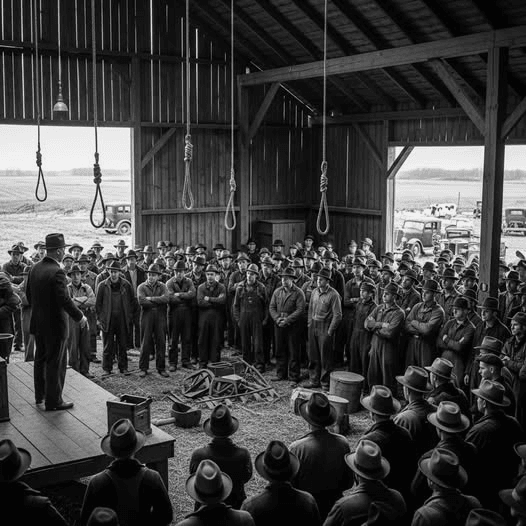
In 1936, an iconic and chilling photograph was captured at a farm foreclosure auction in Michigan. It featured two hangman's nooses dangling from a tree—not as a tool of execution, but as a stark, symbolic warning. This event was part of a broader phenomenon known as "Penny Auctions," a form of grassroots resistance used by Great Depression-era farmers to save their livelihoods from banks. The "Penny Auction" ResistanceBy the mid-1930s, the Great Depression had devastated rural America. Falling crop prices and mounting debt left thousands of farmers unable to pay their mortgages. When banks moved to foreclose, they would put the farm and all its equipment up for public auction to recoup the loan. In response, local communities organized to subvert the process:
The Michigan Incident (May 1936)While penny auctions were common throughout the Midwest (particularly in Iowa and Nebraska), the 1936 Michigan auction became one of the most famous due to the photographic evidence of the nooses.
The image captured the desperation and radicalization of the American farmer. By 1936, many felt the legal system and the banking industry had abandoned them, leading them to adopt "frontier justice" tactics to protect their neighbors. To the farmers, the bank was the aggressor, and the noose was a tool of "community defense."
Impact and Legacy
The penny auctions were highly effective in the short term but had complex long-term effects:
|
0 Comments
Join the conversation
Be the first to comment
Share your thoughts above.