

🏈 A Slice of History: |
The Detroit Lions and the Thanksgiving Day Game |
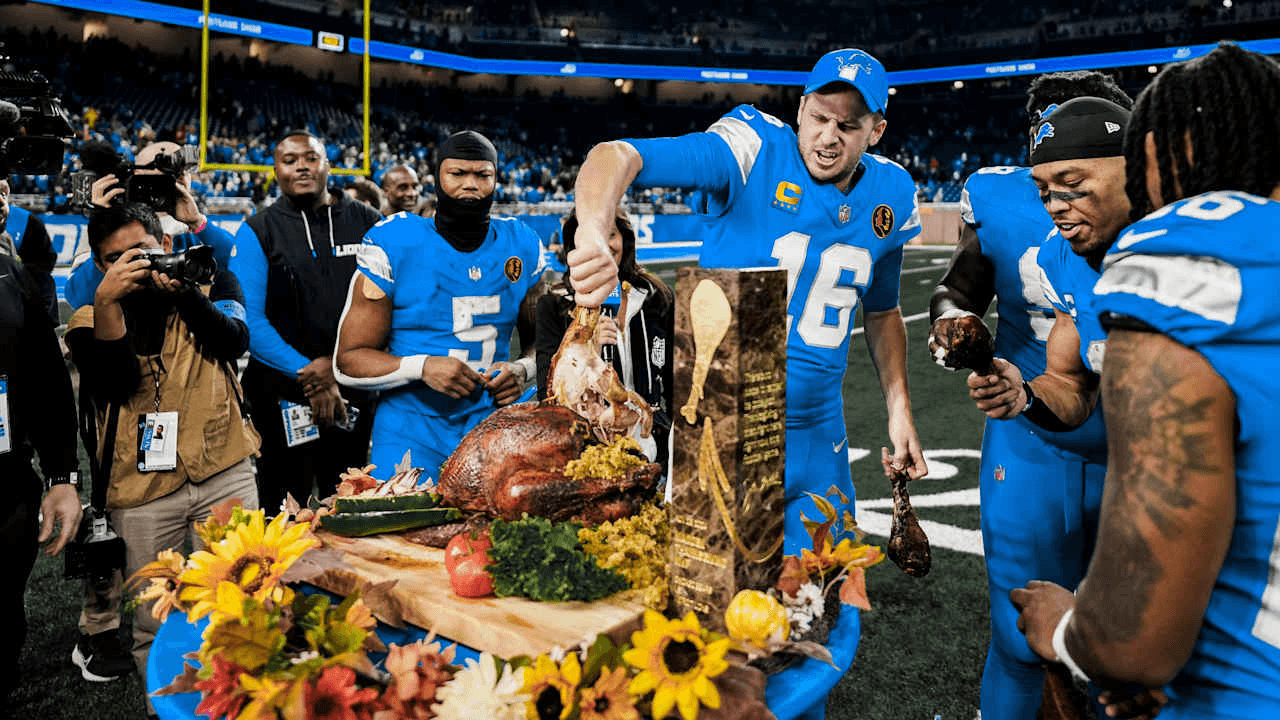
For millions of Americans, Thanksgiving Day traditions are incomplete without the unmistakable sight of the Detroit Lions taking the field. More than just a football game, the annual contest has become a cultural fixture, a shared national ritual as essential to the holiday as the turkey and the parade. Yet, this storied tradition, one of the longest-running in all of American professional sports, began not out of reverence for tradition, but as a bold, necessary marketing "gimmick" by a struggling franchise.
The Bold Beginning: George A. Richards’ Vision
The year was 1934. The Lions, newly relocated to Detroit from Portsmouth, Ohio, as the Spartans, were struggling to capture the attention of a city already enamored with the Detroit Tigers baseball team. Attendance was sparse, rarely topping 15,000. George A. Richards, the team’s first owner and a successful local radio executive, recognized he needed a spectacular way to generate buzz and fill seats. He looked to Thanksgiving Day—a time when college and high school games had already established a sporting tradition—and decided to schedule a professional contest.
Richards' inaugural Thanksgiving gamble was a masterstroke of marketing. He scheduled a showdown against the undefeated and reigning World Champion Chicago Bears, a game that promised to be a crucial matchup for the NFL Western Division title. To ensure national relevance, Richards used his connections to arrange a live, coast-to-coast radio broadcast on NBC across a then-unprecedented 94 stations.
The gamble paid off spectacularly. All 26,000 tickets for the game at the University of Detroit Stadium sold out two weeks in advance, with an estimated 25,000 more fans turned away at the gate. Though the Lions lost a classic nail-biter 19-16, the game's success cemented the tradition. The widespread radio broadcast also introduced professional football to a national audience, greatly boosting the NFL’s exposure and stature.
Decades of Tradition and Continuity
With the exception of a six-year hiatus between 1939 and 1944 during World War II, the Lions have hosted a game on Thanksgiving every single year since. This remarkable run of continuity makes the Detroit game the longest-running scheduled sporting event in NFL history.
Over the decades, the Thanksgiving game evolved from a promotional stunt into a centerpiece of the holiday. The game has served as a showcase for some of the franchise's biggest stars, from Hall of Famers like Earl "Dutch" Clark in the early years to the championship teams led by Bobby Layne in the 1950s. A particularly memorable display came in 1997 when Barry Sanders dazzled the nation, rushing for 167 yards and three touchdowns in a decisive victory over the Chicago Bears, cementing his place in holiday lore.
In 1966, the Dallas Cowboys joined the holiday schedule, and in 2006, the NFL added a third primetime game, but the early afternoon kickoff hosted by the Lions remains the spiritual and traditional anchor of the day's football marathon.
The All-Time Record: A Rollercoaster Ride
The Lions' Thanksgiving Day history has been marked by memorable moments but also periods of significant struggle. Their all-time record on the holiday, currently 37 wins, 45 losses, and 2 ties (as of the end of the 2024 season), reflects a team that has often endured long stretches of losing. This includes a disheartening nine-game losing streak that ran from 2004 to 2012 and other recent droughts.
Despite the sometimes frustrating on-field results, the spirit of the tradition has never faded. For the city of Detroit and its loyal fans, the Thanksgiving game is a defiant celebration of football and community. It is a shared experience—the background noise to family gatherings, the reason the clock is watched until kickoff, and a powerful symbol of the team's historic roots. From a desperate marketing stunt in 1934 to an enduring national institution, the Detroit Lions' Thanksgiving Day game has earned its place in the heart of American holiday culture. |
0 Comments
Join the conversation
Be the first to comment
Share your thoughts above.