

The Hidden Cost: Why Michigan's Environment Bears the Brunt of Data Center Expansion |
Uncovering the Environmental Impact of Michigan's Data Center Growth |
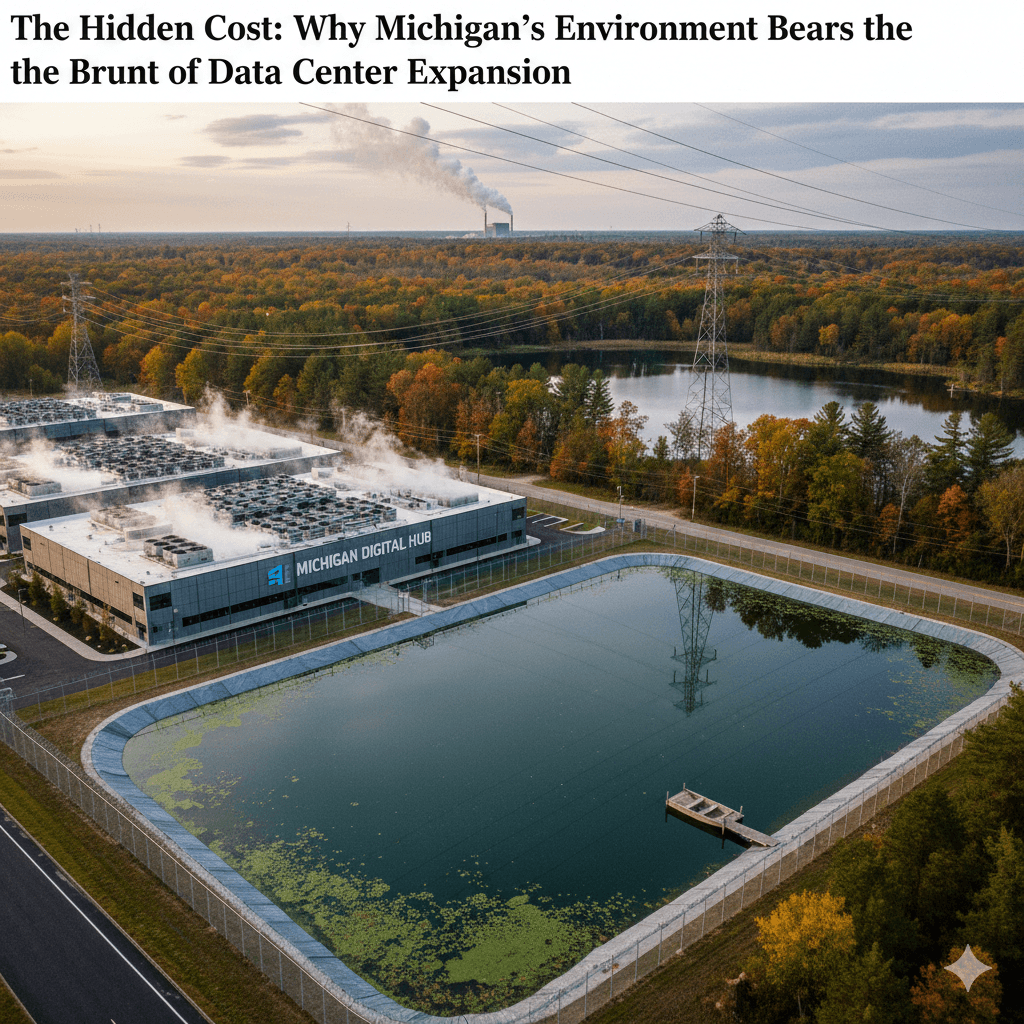
Michigan, with its abundant freshwater resources and relatively cool climate, is increasingly becoming a target for the burgeoning data center industry. While these digital behemoths are crucial for our interconnected world, powering everything from streaming services to artificial intelligence, their unchecked proliferation in our state poses significant and often overlooked threats to Michigan's precious environment and vital water supply. It's a trade-off we need to scrutinize carefully, as the promise of technological advancement shouldn't come at the cost of our natural heritage
One of the most immediate and pressing concerns is the staggering amount of water these facilities consume. Data centers are essentially giant computers, and like any computer, they generate immense amounts of heat. To prevent their servers from overheating and crashing, sophisticated cooling systems are employed, and many of these systems rely heavily on water. Michigan, bordered by four of the five Great Lakes, may seem like an ideal location due to its seemingly endless supply of freshwater. However, this perception can be dangerously misleading.
Consider the process: water is drawn from local sources – often municipal supplies or direct lake/river withdrawals – to cool the data centers. This water then either evaporates into the atmosphere, carrying with it dissolved minerals and contributing to localized humidity, or it is discharged back into the water system, often at a warmer temperature than when it was drawn. This "thermal pollution" can disrupt aquatic ecosystems, harming fish and other organisms that are sensitive to temperature fluctuations. Furthermore, the chemicals used in some cooling systems to prevent scaling and corrosion can also find their way into our waterways, posing additional ecological risks.
Beyond the sheer volume of water consumed, the energy demands of large data centers are astronomical. They operate 24/7, drawing power from the electrical grid, which in Michigan is still heavily reliant on fossil fuels. This means that for every gigabyte of data processed and stored, there's an associated carbon footprint from the power plants burning coal or natural gas. While some data centers are making efforts to transition to renewable energy sources, the pace of this transition often lags behind the rate of expansion. The increased demand for electricity strains our existing infrastructure and can necessitate the development of new energy generation facilities, further contributing to environmental degradation.
The land footprint of these facilities is another significant issue. Data centers require vast tracts of land for their buildings, cooling towers, substations, and associated infrastructure. This often means converting agricultural land, forests, or other natural habitats into industrial sites. The loss of these natural areas can lead to habitat fragmentation, reduced biodiversity, and increased stormwater runoff, which can further exacerbate water quality issues. The construction phase itself involves heavy machinery, ground disturbance, and potential for erosion, all of which have environmental consequences.
Moreover, the waste generated by data centers, particularly electronic waste (e-waste) from outdated servers and equipment, presents a long-term challenge. While many companies aim for responsible recycling, the sheer volume of e-waste means that proper disposal and management are critical to prevent hazardous materials from leaching into our soil and water.
While data centers bring jobs and economic investment, it's crucial for Michigan to adopt a comprehensive and forward-thinking strategy. This includes stringent regulations on water usage, promoting closed-loop cooling systems, incentivizing the use of 100% renewable energy, and requiring thorough environmental impact assessments before granting permits. We must also encourage the development of smaller, more localized data centers that can better integrate with existing infrastructure and minimize environmental impact.
Michigan's natural beauty and freshwater abundance are not limitless resources to be exploited. As the digital age continues to boom, we must ensure that our pursuit of technological advancement does not inadvertently diminish the very environment that makes our state so unique and desirable. The hidden costs of unchecked data center expansion are too great for Michigan to ignore. |
0 Comments
Join the conversation
Be the first to comment
Share your thoughts above.